The Protein Trap: Why Plant Protein For Menopause Might Be the Smarter Choice After 40
Protein advice is everywhere right now. Here’s the part almost nobody mentions: where it comes from matters just as much as how much you eat.
Here’s a claim I don’t make lightly: more protein might not be the fix you think it is. The source might matter just as much as the number.
If you’ve spent the last year or two hearing that women over 40 need to eat more protein or risk losing muscle, that message is real, and it’s backed by solid research. But somewhere between the protein powder aisle and the fifth Instagram reel telling you to eat 30 grams before 9am, something quietly got left out of the conversation: where that protein comes from matters too, and almost nobody is talking about it.
Let’s call it what it is. The protein trap: chasing a number so hard that you crowd out something your body needs just as much. Here’s the good news. You don’t actually have to choose. Whole plant proteins hand you both in the same bite, and that’s exactly what we’re breaking down today – plant protein for menopause health.
Why the Protein Push Is Actually Real
Let’s start by giving credit where it’s due, because the protein message isn’t hype. Starting around 40, women begin losing lean muscle mass, and that loss speeds up through perimenopause and beyond as estrogen declines. Less muscle means a slower metabolism, and it also means your body is less resilient: less able to bounce back from a hard week, a bad flu, or a long flight.
A well-established research group on nutrition and aging, the ESPEN Expert Group, backs up a target you’ve probably heard before: about 25 to 30 grams of protein per meal to protect muscle as we age. A 2025 study in Frontiers in Nutrition looked at older women specifically and found that getting enough protein helped preserve muscle, not just prevent weight gain.
So no, the protein advice isn’t wrong. It’s just incomplete.
What Gets Lost When You Chase Protein Alone
Here’s where it gets interesting. When most of us hear “eat more protein,” we picture chicken breast, a protein shake, maybe a hard-boiled egg. All fine sources of protein. But none of them bring a single gram of fiber to the table, and fiber is doing more heavy lifting in midlife than most of us realize.
A 2022 study in Nutrients found that fiber feeds the good bacteria in your gut, which produce compounds tied to gut health, steadier blood sugar, and lower inflammation. A 2025 review in Nature Reviews Microbiology went further, linking a healthy gut to how your body manages hormones, including estrogen, sometimes called the gut-hormone connection.
There’s also the inflammation piece. A 2026 review in Nutrition, Metabolism and Cardiovascular Diseases found that eating more plant-forward meals was linked to lower levels of C-reactive protein, a blood marker doctors use to measure inflammation. That’s not a small thing for anyone dealing with the achy joints and puffiness that can show up during the menopause transition.
Think of it this way. If you build your plate mostly around meat and protein powder, you’re getting the protein and missing the fiber. If you build it around beans, lentils, tofu, tempeh, or edamame, you’re getting both. Same effort, twice the payoff.
Why Plant Protein For Menopause
I want to address the soy question directly, because it comes up constantly, usually from someone who’s heard that soy is somehow risky during menopause. It isn’t. A 2013 review of the research in PLoS ONE looked at soy and breast cancer risk and found no evidence that soy increases risk. The American Institute for Cancer Research backs this up too, noting that soy foods are safe, and some research even points to a protective effect.
Beyond soy, plant proteins bring something animal proteins simply can’t: phytoestrogens, plant compounds that bind weakly to estrogen receptors in the body. Think of them as gentle hormonal balancers, not hormone replacement, that may help ease some of the fluctuation happening during this transition.
And you’re not limited to soy anyway. Lentils, chickpeas, black beans, hemp seeds, chia seeds, and quinoa all bring meaningful protein to your plate too, each with its own mix of fiber, minerals, and other nutrients. Variety is doing a lot of quiet work here.
What This Actually Looks Like on Your Plate
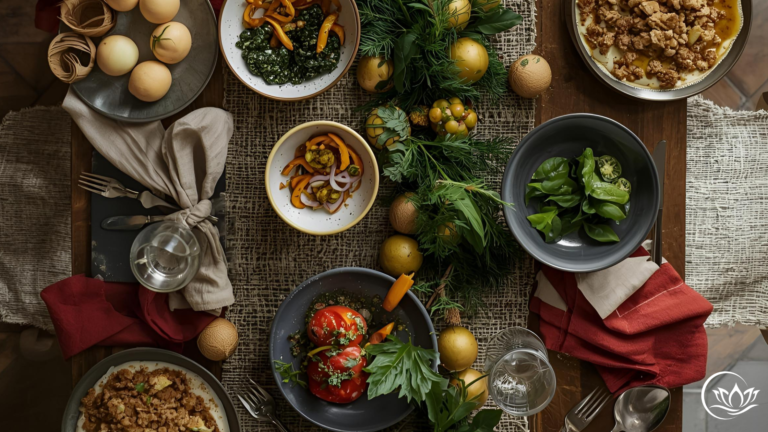
None of this requires a total overhaul. Here’s what hitting that 25 to 30 gram target with whole plant foods can look like in real life:
- Breakfast: tofu scramble with black beans and greens
- Lunch: lentil and quinoa bowl with tahini drizzle
- Dinner: chickpea curry over brown rice, with a side of edamame
- Snack: hummus with veggies, or a handful of roasted chickpeas
Notice there’s no protein powder required, no strict meal plan, and no need to give up foods you enjoy. It’s a buffet, not a rulebook. Pick what sounds good, build your plate around it, and let the fiber come along for free.
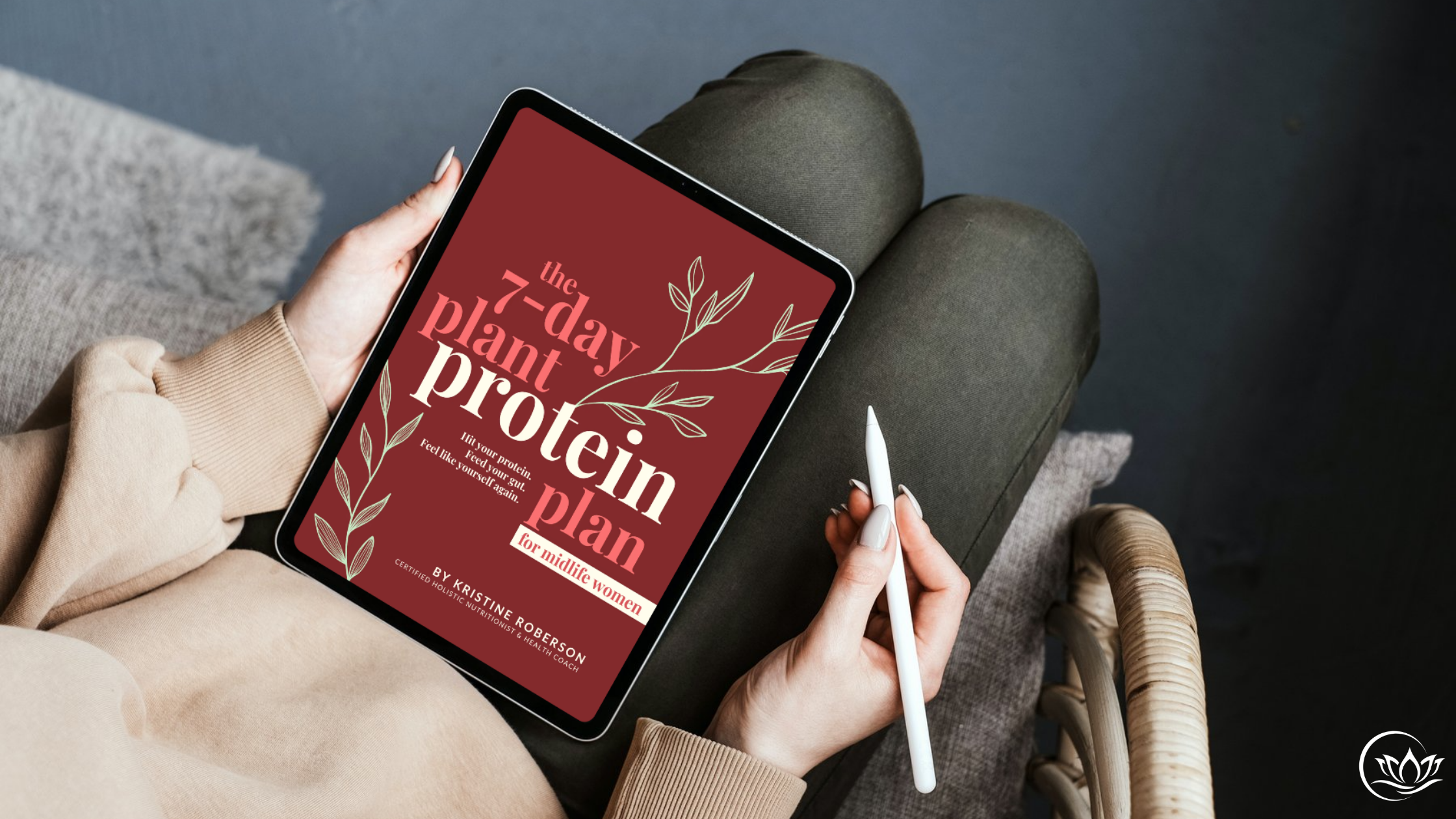
If you want this already mapped out for you, I just published something I’ve been working on for months: The 7-Day Plant Protein Plan. It’s a full week of plant-powered meals, sixteen recipes in total, each one built to land you in that 25 to 30 gram protein range, laid out as a buffet so you choose what sounds good and build your own week. Every recipe comes with its protein, fiber, and calorie counts already worked out, plus a one-shop grocery list and a 90-minute Sunday prep session to set the whole week up.
Protein is the doorway. What’s on the other side is feeling like yourself again. [Grab it here → healthyhermidlife.com/protein]
The Bottom Line
Protein matters in midlife. That part is true and worth taking seriously. But the source matters just as much as the number. Whole plant proteins hand you protein and fiber in the same bite, something animal protein and protein powder simply can’t match. You don’t need to overhaul your plate to benefit. Start with one meal, add a plant protein source, and notice how full and steady you feel afterward.
Related Links:
Frequently Asked Questions:
Yes. Lentils, beans, tofu, tempeh, edamame, and quinoa all provide meaningful protein, and spreading intake across meals, aiming for 25 to 30 grams each, tends to work better than trying to load it all into dinner.
Yes. A 2013 review in PLoS ONE and guidance from the American Institute for Cancer Research both found no evidence linking soy to increased breast cancer risk, and some research suggests a protective effect.
Research from the ESPEN Expert Group and a 2025 Frontiers in Nutrition study both point to roughly 25 to 30 grams per meal as a solid target for protecting your muscle as we age.
Tofu, tempeh, lentils, chickpeas, black beans, edamame, hemp seeds, chia seeds, and quinoa are all excellent choices, each bringing fiber and other nutrients that animal protein doesn’t offer.