
Holiday Eating Without the Guilt: 10 Ways Midlife Women Can Avoid the All-or-Nothing Spiral
Let’s be honest: Holiday eating without guilt hits different in midlife. One day you feel totally steady with your habits, and the next day you’re grazing on appetizers, overeating at dinner, and waking up thinking: “Why did I do that again?” If you’re nodding your head right now — you’re not alone. And more importantly, you’re not doing anything wrong. The holidays are a perfect storm of:
- emotional triggers
- social pressure
- disrupted routines
- hormone changes
- sleep issues
- stress
- nostalgia
- and “food everywhere”
Midlife bodies are more sensitive to all of it. This post is your Holiday Eating SOS — a research-backed, compassionate guide to staying grounded without dieting, restricting, or obsessing. These are the 10 tools I teach my clients (and use myself!) to help midlife women get through the season feeling calmer, more connected, and more in control — without the guilt.

Why Holiday Eating Without Guilt Feels Harder in Midlife
If you’ve noticed holiday overeating becoming more frequent as you age, there are real physiological reasons. Let’s break them down.
1. Hormonal Shifts Increase Cravings
As estrogen and progesterone decrease in perimenopause and menopause, your hunger cues become less predictable. Harvard Health notes that lower estrogen impacts appetite-regulating hormones like leptin and ghrelin. This means holiday foods can feel:
- harder to resist
- more comforting
- more “urgent”
Your body isn’t betraying you — it’s responding to hormonal shifts.
2. Stress Is Higher — And Cortisol Affects Hunger
Women in midlife are juggling more during the holidays than ever before. APA research shows stress increases emotional eating, especially in women. Add holiday family dynamics, end-of-year deadlines, social expectations… and emotional eating becomes a nervous system response, not a lack of discipline.
3. Sleep Disruptions Impact Appetite
Cleveland Clinic shows that poor sleep increases ghrelin (hunger hormone) and decreases leptin (fullness signal). Midlife women already sleep poorly — which makes holiday overeating more common.
4. Food Is Everywhere — And Your Brain Responds Automatically
Bright lights. Sugar. Smells. Social pressure. Nostalgia. Your brain sees these cues as “eat now,” and dopamine drives the decision. This is neurobiology, not willpower.
The Holiday Spiral (And How to Break It)
Most midlife women experience the same cycle:
- Eat mindfully all day →
- Holiday meal happens →
- Eat past fullness →
- Feel guilt →
- Promise to “start over” tomorrow →
- Restrict →
- Get overwhelmed →
- Overeat again
This spiral isn’t about food. It’s about your nervous system, hormones, and emotions. Here’s how to break it.

10 Holiday Eating Without Guilt Tips for Midlife Women
1. Eat Breakfast — Don’t “Save Up”
Skipping meals increases cortisol and sets you up for holiday overeating later. Mayo Clinic recommends steady meals to regulate appetite. Try:
- protein (25–30g)
- fiber
- fruit
- healthy fat
A simple tofu scramble, yogurt bowl, or avocado toast works beautifully.
2. Ask Yourself: “What am I actually needing right now?”
Before you eat, pause for five seconds. Ask:
- Am I hungry?
- Am I stressed?
- Am I tired?
- Am I overwhelmed?
- Am I craving comfort?
This is not to talk yourself out of eating. It’s simply to reconnect your body with your brain. Connection reduces chaos.
3. Build a Plate That Keeps You Steady
Use this formula:
Protein + Fiber + Healthy Fat + Carb You Love
This keeps blood sugar steady so you don’t feel out of control later. Examples:
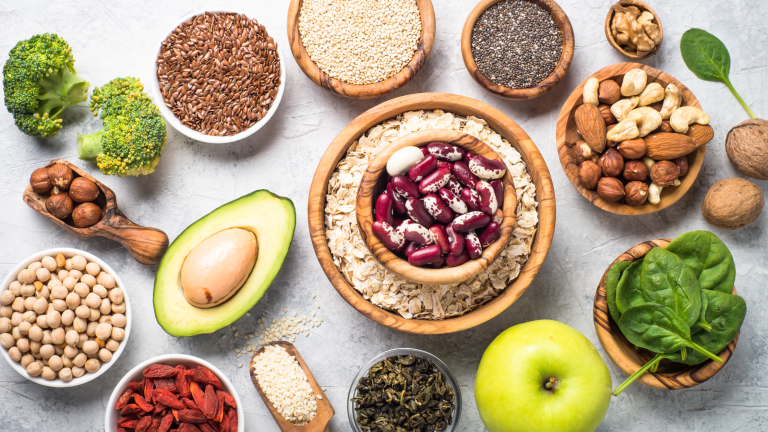
- roasted veggies + quinoa + beans
- lentil loaf + side salad
- tofu + greens + potatoes
Simple. Nourishing. Stabilizing.
4. Slow Down Your Eating Just 10–20%
Not perfection — just slightly slower. A few simple ways:
- put your fork down between bites
- chew fully
- take one breath before the next bite
- sip water or tea during the meal
Your fullness cues need time to catch up, especially in midlife.
5. Aim for “Satisfied, Not Stuffed”
You don’t need food rules. Just notice the moment when eating stops feeling pleasurable. That tiny moment — when the taste fades and you keep eating anyway — is your cue. Catching this once a day makes a big difference.
6. Use Nervous System Tools Before the Event
If you enter the party already stressed, your brain becomes less sensitive to fullness cues. Try a 3-minute reset:
- deep belly breathing
- legs up the wall
- warm shower
- calming music in the car
- a short walk
Regulate before you arrive.
7. Build in Permission Ahead of Time
Say to yourself: “I’m allowed to enjoy this food.” Relief lowers cortisol. Lower cortisol = steadier appetite. Restriction leads to overeating. Permission leads to balance.
8. Don’t Label Foods as “Good” or “Bad”
Food has no morality. You are not “good” for eating salad or “bad” for eating pie. Removing labels removes guilt. Removing guilt removes the spiral.
9. When You Overeat — Use the “Compassion Reset”
Instead of: “I blew it.” Try: “Okay. I’m human. It happened. Now how can I take care of myself?” Self-compassion reduces binge eating more than willpower. Ideas:
- short walk
- water
- stretching
- breathing
- rest
- a supportive thought
This is how you stop the spiral in real time.
10. Ask Yourself: “How do I want to feel tomorrow?”
Not: “What should I eat?” But: “How do I want my body to feel?” This shifts your choices from pressure → intention. It’s grounding, empowering and it works.
What to Do If You Already Overate
Here’s the post-overeating checklist I teach clients:
- Drink water
- Avoid restricting your next meal
- Go for a 5–10 minute walk
- Use slow, deep breathing
- Remind yourself “this is normal”
- Eat a balanced next meal
- Sleep early if you can
- Practice self-compassion
Your body bounces back faster than you think — when you’re kind to it.
Your Body Isn’t Asking for Perfection. It’s Asking for Connection.
Holiday eating without guilt doesn’t require control. It requires awareness, compassion, and steadiness. When midlife women stop trying to be perfect and start trying to be present, everything gets easier:
- cravings calm
- guilt lessens
- energy stabilizes
- overeating decreases
- confidence increases
You deserve a holiday season where you enjoy the food, enjoy the people, and enjoy yourself.
Download the Midlife Metabolic Reset Guide
If you want simple, gentle support for your metabolism, digestion, and holiday energy, grab my free guide.
👉 Download the Midlife Metabolic Reset Guide
Or if you’re ready for deeper support, book a free coaching call for January.
You don’t have to do this alone.
Still Hot Flashing, Exhausted, Gaining Weight or Frustrated With Midlife Changes?
In my 90-Day Midlife Reset, I help midlife women reduce bloating, sleep better, and feel like themselves again—without food rules, overwhelm, or shame.
Apply for Your Free 20-Minute Wellness Call.
FAQ
Use mindfulness, balanced meals, nervous system tools, hydration, and self-compassion — not restriction.
Aim for balanced meals with protein, fiber, healthy fats, and enjoyable carbohydrates to keep blood sugar stable.
Hormonal shifts, stress, sleep disruptions, and emotional triggers make midlife women more vulnerable to overeating — it’s normal.
Hydrate, take a short walk, avoid restriction, and use self-kindness to prevent the guilt spiral.