What to Eat in Midlife: A Simple Framework (And Why the New Food Pyramid Misses Menopause)
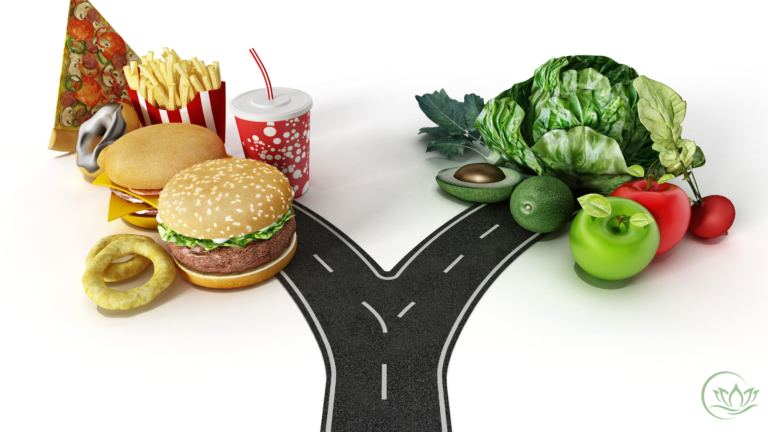
If you’ve looked at the latest “eat more of this, less of that” graphic and thought, Cool… but why do I still feel tired at 3 p.m.? — you’re not alone. National nutrition guidelines are built to improve health across millions of people. They’re meant to be broadly helpful. But menopause isn’t broad. It’s personal. And it changes the rules in ways a pyramid (or plate) can’t always capture, leaving us to wonder what to eat in midlife.
So today, let’s do what my old journalist brain loves: separate what’s true from what’s missing, and give you a simple, realistic framework for what to eat in midlife—especially if you’re dealing with lower energy, stubborn hunger, and that “my body is not responding like it used to” feeling.
The short answer
National nutrition guidelines are useful — but they’re incomplete for midlife women.
If you’ve tried following general advice and still feel tired, hungry, or frustrated, the problem isn’t you. It’s that those guidelines weren’t designed with menopause in mind. (Dietary Guidelines)
Why food pyramids feel harder to follow after 40
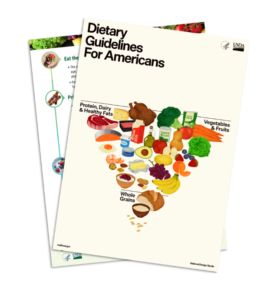
Most dietary guidelines are built for population-level health. They aim to:
- reduce disease risk across millions of people
- reflect averages
- work over decades
But they don’t really account for the stuff midlife women are actively living with:
- hormonal transitions
- disrupted sleep
- chronic stress
- changing energy needs
- accelerated muscle and bone loss around menopause (Lippincott Journals)
So when you apply general advice literally and don’t feel better, that’s not a personal failure. It’s a mismatch.
What the newest recommendations get right
The newest U.S. Dietary Guidelines (2025–2030) still emphasize the big foundational stuff we can all get behind:
- more whole foods
- more fiber-rich plants
- more variety
- fewer ultra-processed foods (USDA)
Those basics support digestion, heart health, and long-term wellness. They matter.
But here’s where the nuance goes missing for menopause: the guidelines can tell you what a “healthy pattern” looks like… without helping you build meals that actually keep you steady, satisfied, and energized right now.
And nowhere is that more obvious than the saturated fat conversation.
The saturated fat confusion, explained simply
Why saturated fat is limited
The reason saturated fat is limited is pretty specific: higher saturated fat intake is associated with increased LDL cholesterol, which is a cardiovascular risk factor at the population level. (www.heart.org)
This guidance is not about:
- weight gain
- hormones directly
- “good” vs. “bad” foods
It’s about long-term heart health when saturated fat intake is consistently high. (AHA Journals)
What the recommendation actually is
Federal dietary guidelines recommend keeping saturated fat under 10% of total daily calories (for most people age 2+). (Dietary Guidelines)
On a 2,000-calorie diet, 10% is about 200 calories, which works out to roughly 20–22 grams of saturated fat per day (because fat has 9 calories per gram). (Dietary Guidelines)
How that compares to common foods
Here’s where people feel like the math starts gaslighting them.
A few “normal” servings can add up quickly:
| Food (typical serving) | Saturated fat (approx.) |
|---|---|
| 1 oz cheddar cheese | ~6 g |
| 1 cup whole milk | ~4.5 g |
| 1 large egg | ~1.6 g |
| 3 oz lean beef | ~2–3 g |
| Higher-fat cuts of beef | ~5–8 g+ |
(These numbers vary by brand and cut, but the pattern is the point.) (Harvard Health)
So yes—someone can follow “recommended food groups” and still bump into the saturated fat ceiling faster than they expected. That’s the confusion.
Why this is especially tricky in menopause
Midlife bodies often don’t behave like the assumptions baked into general guidance (like stable energy needs and evenly distributed meals).
A lot of women in midlife are unintentionally doing things like:
- under-eating protein
- skipping meals
- eating lightly all day
- getting depleted by evening
- then feeling snacky, ravenous, or “out of control” at night
And the issue usually isn’t saturated fat alone.
It’s overall balance, adequacy, and meal structure.
Where general guidance falls short for midlife women
1) Protein needs often increase (and the guidelines don’t emphasize that clearly)
After menopause, protein matters more for:
- muscle preservation
- bone health
- metabolism
- blood sugar stability (Mayo Clinic McPress)
Many experts suggest many postmenopausal women do well aiming around 1.0–1.2 g/kg/day (especially if you’re active or trying to preserve muscle). (Mayo Clinic McPress)
And if you’re thinking, Okay… but what does that look like on a plate?—hold that thought. We’re going there next.
2) Blood sugar stability matters more than ever
Midlife blood sugar swings can feel sharper. And they don’t always show up as “blood sugar” symptoms.
They show up as:
- energy crashes
- irritability
- anxiety-ish feelings
- cravings that feel intense and urgent
In menopause, how meals are built matters just as much as which foods you choose.
3) Energy and recovery become priorities, not side notes
Advice that once worked can suddenly stop working in midlife.
And here’s the frustrating part: eating too lightly (or restricting too aggressively) can backfire—worsening fatigue, cravings, and mood—even when your food choices look “healthy.”
That’s why a midlife-friendly approach has to prioritize adequate fuel and steady meals, not just food rules.
A simpler way to think about meals in midlife
Instead of rigid rules or tracking every bite, use a flexible framework that supports your physiology.
The Midlife Plate Framework
At most meals, aim to include:
- A protein source
- Fiber-rich plants (think: volume + minerals + gut support)
- Fat or flavor (because satisfaction matters)
- Enough food (because “eating like a bird” usually ends in a snack spiral)
That’s it. Four anchors.
Not perfection. Not a pyramid. A structure you can actually use on a Tuesday.
What this looks like in real life
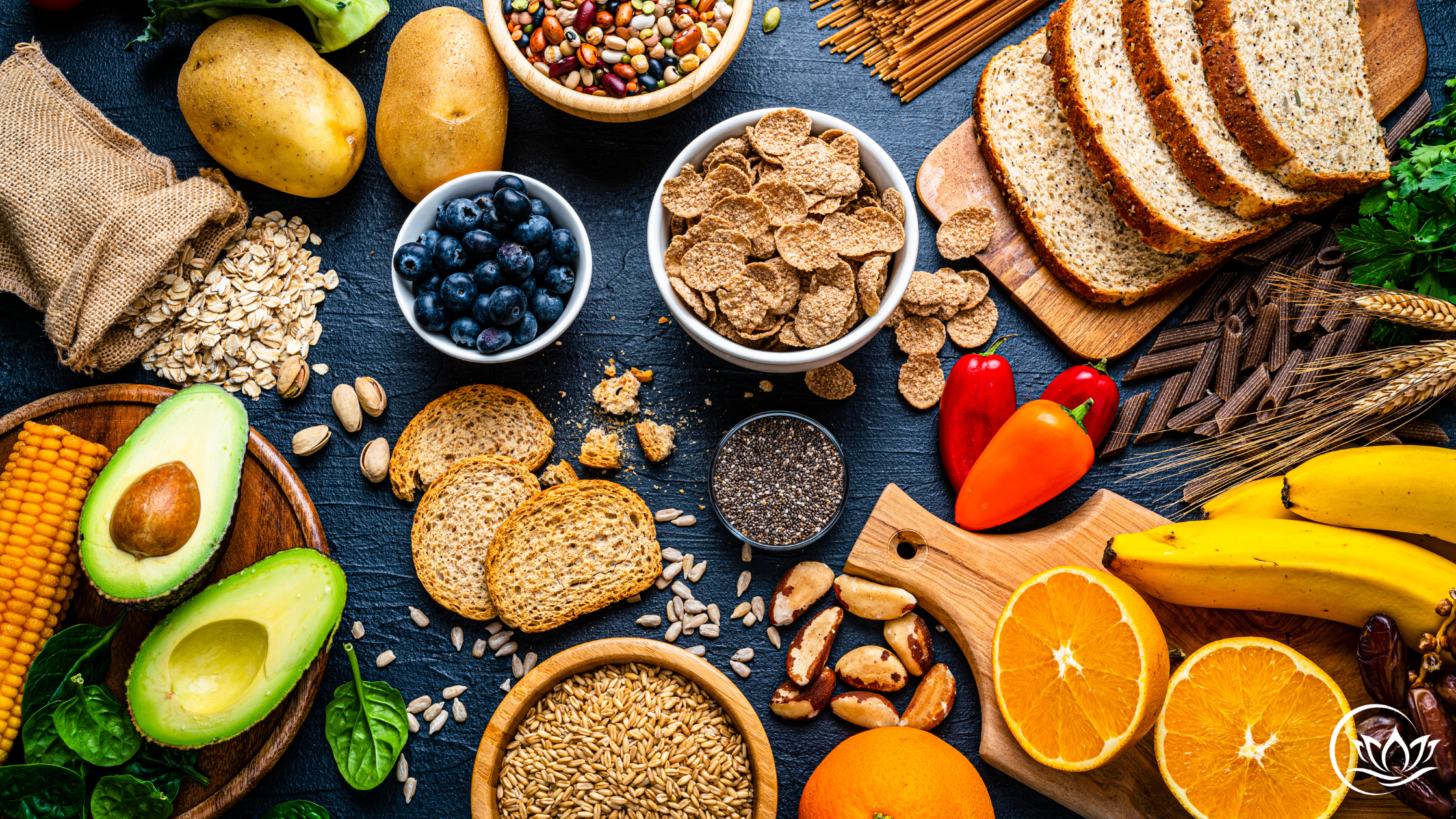
- Breakfast: soy yogurt + berries + chia/flax + protein powder (protein + fiber + fat/flavor + enough)
- Lunch: lentil/quinoa bowl + crunchy veggies + tahini dressing (protein + fiber + fat/flavor)
- Dinner: tofu stir-fry + mixed vegetables + rice + sesame/peanut sauce (protein + fiber + carbs + fat/flavor)
If you’re thinking, Wait, you didn’t mention saturated fat at all in those examples…—exactly.
When meals are built around protein + plants + satisfying fats, saturated fat usually takes care of itself without you obsessing over numbers.
The takeaway
Nutrition guidelines are a foundation, not a verdict. (Dietary Guidelines)
Your energy, digestion, mood, strength, and satisfaction matter more than perfect adherence to a diagram.
Midlife eating isn’t about control—it’s about support.
FAQ: What to Eat in Midlife
A simple midlife-friendly approach is to build most meals around protein + fiber-rich plants + satisfying fat/flavor, and to make sure you’re eating enough to feel steady. This supports energy, cravings, muscle, and blood sugar—especially during menopause.
Most national guidelines are designed for population-level health and don’t fully account for menopause-related changes like sleep disruption, stress load, shifting appetite, and accelerated muscle loss. That mismatch can make “general healthy eating” feel less effective in midlife.
The U.S. Dietary Guidelines recommend keeping saturated fat to less than 10% of daily calories for most people age 2+. On a 2,000-calorie pattern, that’s roughly 20–22 grams per day.
Saturated fat is limited because higher intakes are associated with higher LDL cholesterol, which is a cardiovascular risk factor at the population level.
Many midlife women benefit from more protein to support muscle preservation, bone health, metabolism, and blood sugar stability. Some experts suggest postmenopausal women often do well around 1.0–1.2 g/kg/day, depending on activity level and health goals.
Try this quick structure at most meals:
– Protein
– Fiber-rich plants
– Fat or flavor
– Enough food
It’s flexible, reduces decision fatigue, and helps prevent the under-eating → evening cravings cycle.
That’s often a sign your meals may be missing protein and/or enough overall fuel, especially earlier in the day. Midlife bodies tend to feel blood sugar dips more strongly, and “healthy” can still be too light if it’s mostly carbs or produce without a protein anchor.
Related reading
- Cravings support: Why Sugar and Carb Cravings Increase in Midlife (And What Your Body Is Actually Asking For)
- Work with me: Free Wellness Consultation
Still Hot Flashing, Exhausted, Gaining Weight or Frustrated With Midlife Changes?
In my 90-Day Midlife Reset, I help midlife women reduce bloating, sleep better, and feel like themselves again—without food rules, overwhelm, or shame.